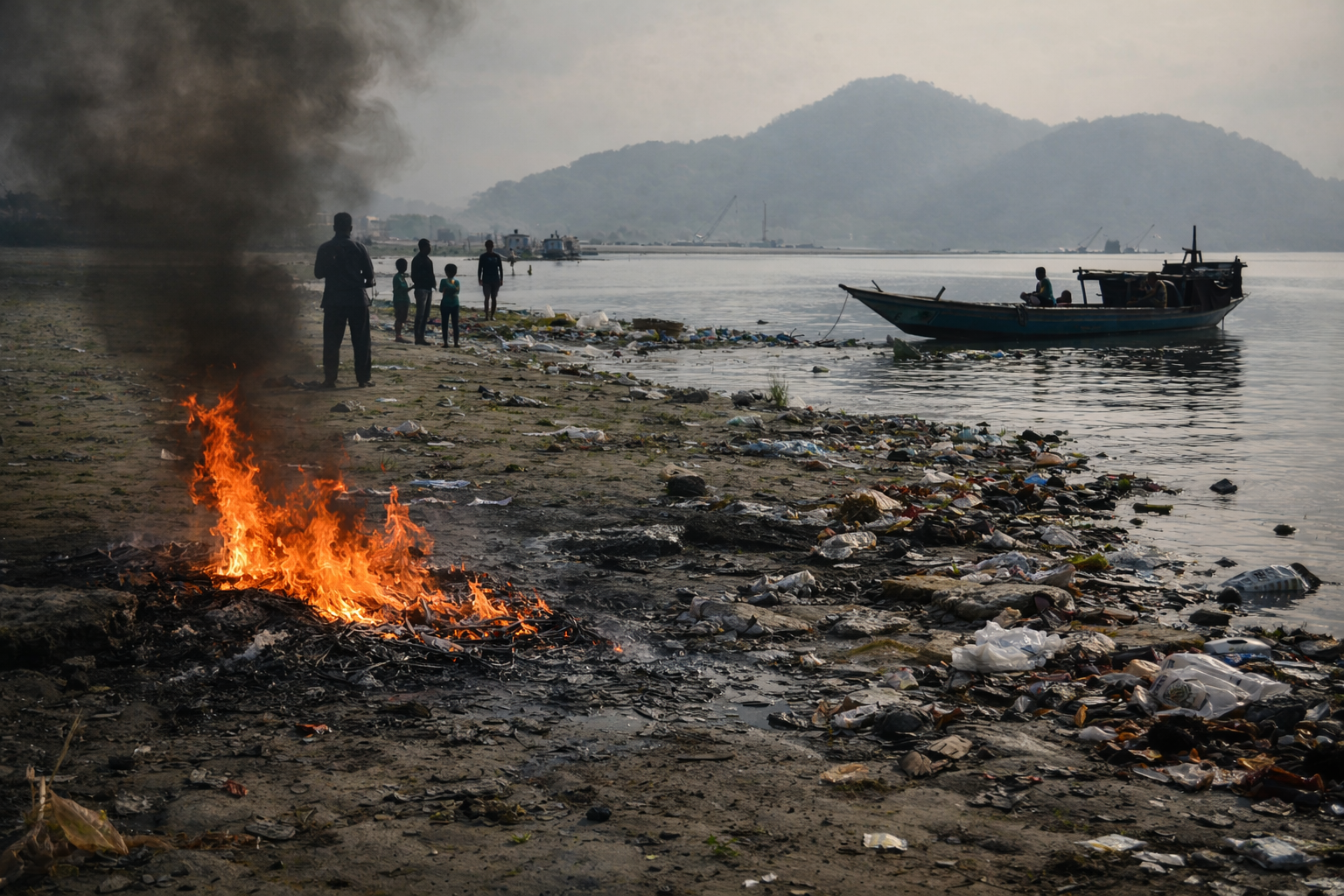
India’s rivers and coasts inherit what cities fail to recover. Wind, monsoon drains, and informal dumps move packaging downhill until the bank looks like a second landfill—one that floats.
The challenge
Cleanup drives pull bags from beaches after the damage is done. Upstream, the same material skipped a bin, a route, or a facility. Open burning on the shore compounds the insult: air pollution layered on aquatic pollution.
Boats, livelihoods, and drinking-water catchments sit next to that edge. The optics are devastating; the economics are worse when plastics that could have been feedstock become sediment and smoke.
Protecting a river is a collection problem wearing a geography costume.
The approach
gnufox focuses on the curb-to-MRF path. Scheduled pickup through Wasty™ reduces the pile that rains wash into drains. Smart Sortation™ captures polymers before they leak into open dumps near waterbodies. High-purity output finds industrial buyers instead of monsoon currents.
Coastal and inland municipalities share the same lever: divert early, sort accurately, sell clean. Downstream NGOs still clean banks—but they clean less of what never should have left the home.
What changes
Fewer plastics riding drains to the sea. Fewer shoreline fires. Stronger municipal metrics on diversion that environmental agencies can recognize. The photograph of smoke against water becomes a warning archived—not a weekly scene.
Built from Odisha for India, that is gnufox’s water case: stop the leak where people live, and the river keeps more of its own name.